
If you have been asking yourself why you feel worse since starting your cholesterol medication, you are not alone. Dealing with statin side effects in women – such as debilitating fatigue and muscle pain – is a common frustration that often goes ignored at the doctor’s office.
You went to the doctor, got your labs back, and walked out with a prescription for a statin. You did what you were told. But a few weeks in, something feels off. You are more tired than before. Your muscles ache. You are dragging through the day wondering if this is just aging – or if the pill that was supposed to help you is making things worse.
You are not imagining it.
This is one of the most common things women in their 50s tell me, and it rarely gets a real answer at the doctor’s office. So let’s talk about what statins actually do – and what they also block in the process.
How Statins Work
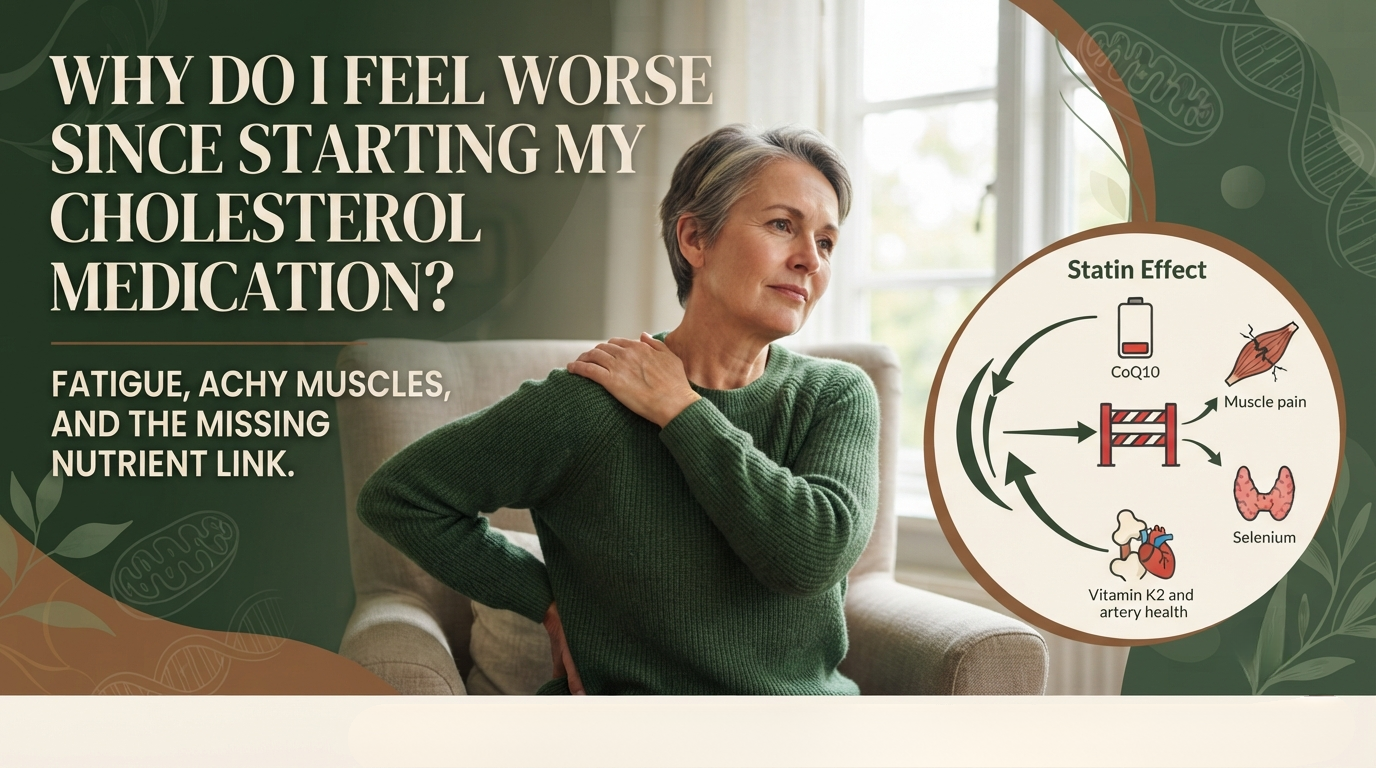
Statins block an enzyme in the liver that makes cholesterol. That same pathway also produces several nutrients your body depends on – CoQ10, Vitamin D, Vitamin K2, magnesium, and selenium. When the pathway shuts down, everything connected to it takes a hit.
Cholesterol is not just a number on a lab report. Every cell in your body needs it.
Why Muscle Pain and Statin Side Effects in Women Are Often Dismissed
Muscle pain and cramping are among the most common complaints from women on statins – and they happen more often in women than in men. Most doctors brush it off. Most women assume it is just getting older.
Here is what is actually going on.
Statins block the production of CoQ10, and lower CoQ10 means less cellular energy – which shows up as muscle aches, fatigue, and weakness. CoQ10 fuels your mitochondria – the little furnaces inside your cells that keep your muscles working and recovering. When that fuel runs low, everything starts to drag.
In serious cases, statins can cause rhabdomyolysis – a breakdown of muscle tissue that puts a heavy burden on your kidneys. Most cases never get that far, but the low-grade damage can happen quietly before you feel a thing.
CoQ10, Energy, and Statin Side Effects in Women
CoQ10 does more than fuel muscles. It supports your heart muscle, your skeletal muscles, and your overall energy production at the cellular level. Low CoQ10 can also create a functional carnitine deficiency, which makes muscle pain and fatigue even worse.
This combination is commonly seen in women dealing with chronic muscle pain, fibromyalgia, and exercise intolerance. If that sounds familiar, it is worth asking whether your nutrient levels have ever been checked.
Statins, Blood Sugar, and Diabetes Risk
This one surprises people. Statins are associated with an increased risk of developing type 2 diabetes. For women who already have diabetes, the risks go further — including increased risk of kidney disease and vision damage.
The connection goes back to the mitochondria. When nutrients like CoQ10 and magnesium are depleted, the mitochondria cannot regulate blood sugar the way they should. That is not a small problem. That is a foundational one.
Your Body Needs Cholesterol to Make Vitamin D
Cholesterol is a critical building block — your body uses it to make vitamin D, hormones, and other essential compounds. Low vitamin D is directly linked to higher muscle soreness risk in statin users, and vitamin D plays a major role in muscle health overall.
Lower cholesterol means lower vitamin D. Lower vitamin D means weaker muscles, lower immunity, lower libido, and a mood that sits closer to the floor. If you are feeling any of those things and no one has tested your vitamin D, that needs to change. Standard blood tests often miss the full picture – intracellular testing is more reliable.
Vitamin K2, Your Gut, and Your Heart
Most people have never heard of Vitamin K2, but your gut makes it and your body depends on it. K2 tells calcium where to go — into your bones, not your arteries.
Statins disrupt gut bacteria, which reduces K2 availability. Without enough K2, calcium can end up deposited in artery walls instead of bones. That is the opposite of what you are trying to accomplish for heart health.
Magnesium: The One Everyone Ignores
Magnesium is depleted by stress, exercise, aging, and medications – statins included. Standard blood tests for magnesium are notoriously unreliable. Meanwhile, low magnesium quietly causes muscle cramps, heart rhythm problems, poor sleep, and blood sugar swings.
Most adults need 400 to 800 mg daily in divided doses. Most are not getting close to that.
Selenium and Your Thyroid
Statins also lower selenium. Selenium is what your thyroid needs to convert the inactive form of thyroid hormone (T4) into the active form (T3). Without enough selenium, thyroid function quietly suffers – and with it, your energy, your metabolism, and your cholesterol patterns. It is a cycle that rarely gets addressed.
Is Lower Always Better?
Current guidelines keep pushing LDL targets lower and lower – sometimes below 70. But cholesterol is not just a heart issue. Your brain runs on it. Research has linked very low total cholesterol levels to increased rates of depression and other serious concerns. Lower is not always safer. That conversation deserves more than a three-minute appointment.
Managing Statin Side Effects in Women: Actionable Steps
Taking control of your health starts with acknowledging these issues. If you suspect you are struggling with statin side effects in women, bring a list of your specific symptoms to your next appointment.
Ask your doctor to check:
- CoQ10 levels
- Vitamin D (intracellular if possible)
- Magnesium (RBC magnesium, not serum)
- Selenium
- Thyroid function
Some people work with clinicians who use alternatives like NSF-certified red yeast rice or time-release niacin. Those options still require monitoring and nutrient support – they are not a free pass. But they exist, and they are worth knowing about.
God designed your body to function. When we are running depleted, we cannot show up the way we were made to – for our families, our work, our faith, or our communities. Stewardship of this body matters. You deserve real answers, not just a prescription and a handshake.
I am here to help. Schedule a free call
Contact us if you have any questions relating to this blog post.