
Improve Digestion with Soaking Nuts and Seeds
Did you know that those healthful nuts and seeds could be wreaking havoc on your digestion? It’s true: nuts, seeds, grains, and legumes contain natural compounds that act as protective inhibitors, making them difficult to digest in their raw, dry form. These inhibitors serve a purpose in nature—they protect the seed until it finds the right environment to sprout. But for us, they can create digestive distress and prevent our bodies from absorbing nutrients efficiently.
Why Soaking Matters
Soaking is a simple and effective way to deactivate these enzyme inhibitors and anti-nutrients like phytic acid and tannins. By soaking nuts and seeds, you begin to mimic the natural germination process, making them easier on your digestive system and more nutritious.
Key Benefits of Soaking Nuts and Seeds
✅ Increases enzyme activity
✅ Boosts nutrient availability and absorption
✅ Reduces anti-nutrients like phytic acid and tannins
✅ Starts the sprouting process, increasing nutrient density
✅ Improves texture and flavor
For example, soaked walnuts lose their bitter, astringent taste because soaking removes the tannins found in their skins. The result is a softer, milder nut that blends better into smoothies, sauces, or baked goods.
What Happens If You Don’t Soak Them?
Raw and unsoaked nuts often contain compounds that inhibit digestive enzymes, making them hard to break down in your gut. Over time, consuming a lot of raw nuts and seeds may contribute to bloating, poor absorption of minerals, and digestive discomfort.
Nature designed these seeds to stay dormant until ideal growing conditions arise—like rain and warmth. Soaking simulates those conditions, signaling the nut or seed to come alive and begin sprouting.
The Soaking Process: What You Need to Know
Tip: Always soak nuts after they’ve been removed from their shells. Shells provide natural protection but are not needed during the soaking process.
While nuts without skins (like macadamias, cashews, and Brazil nuts) may appear cleaner and produce less murky water, soaking is still beneficial for improving blendability and digestion.
How Long Should You Soak?
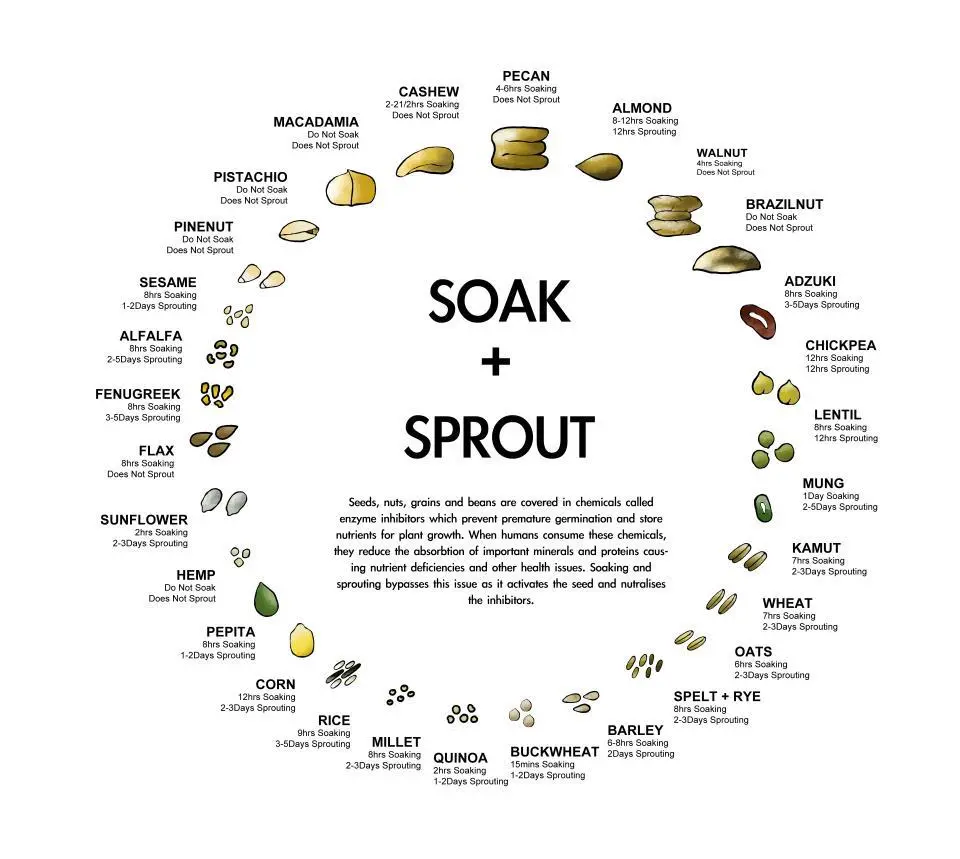
Soaking times vary depending on the hardness of the nut or seed. Here are some general guidelines:
- Almonds: 8–12 hours
- Cashews: 2–4 hours
- Walnuts: 4–6 hours
- Pumpkin Seeds: 6–8 hours
- Sunflower Seeds: 2–4 hours
- Chia or Flax Seeds: Soak only until gelatinous (about 15 minutes)
If you’re short on time, even a 20-minute soak or a thorough rinse can help reduce residues. However, for best results, plan to soak overnight in the refrigerator.
Important: Do not soak nuts in plastic containers, as chemicals from the plastic can leach into the water. Use glass or ceramic bowls instead.
Keeping Soaked Nuts Fresh
Some people prefer to soak nuts in advance and keep them on hand in the fridge. If you do this, make sure to change the soak water every 1–2 days to prevent spoilage.
Also, never use the soak water in recipes. It may contain the very substances you’re trying to remove. Always discard the water and rinse your nuts and seeds well with purified or distilled water.
Final Thoughts
Soaking nuts and seeds is one of the easiest changes you can make for better digestion, improved nutrient absorption, and more enjoyable flavor. Whether you’re adding them to your smoothies, baked goods, or eating them raw, a little prep goes a long way in supporting your gut and energy levels.
Looking for a quick reference? Download our helpful soaking and sprouting infographic for nuts, seeds, grains, and legumes.
Click the image above to enlarge or save it to your device!