
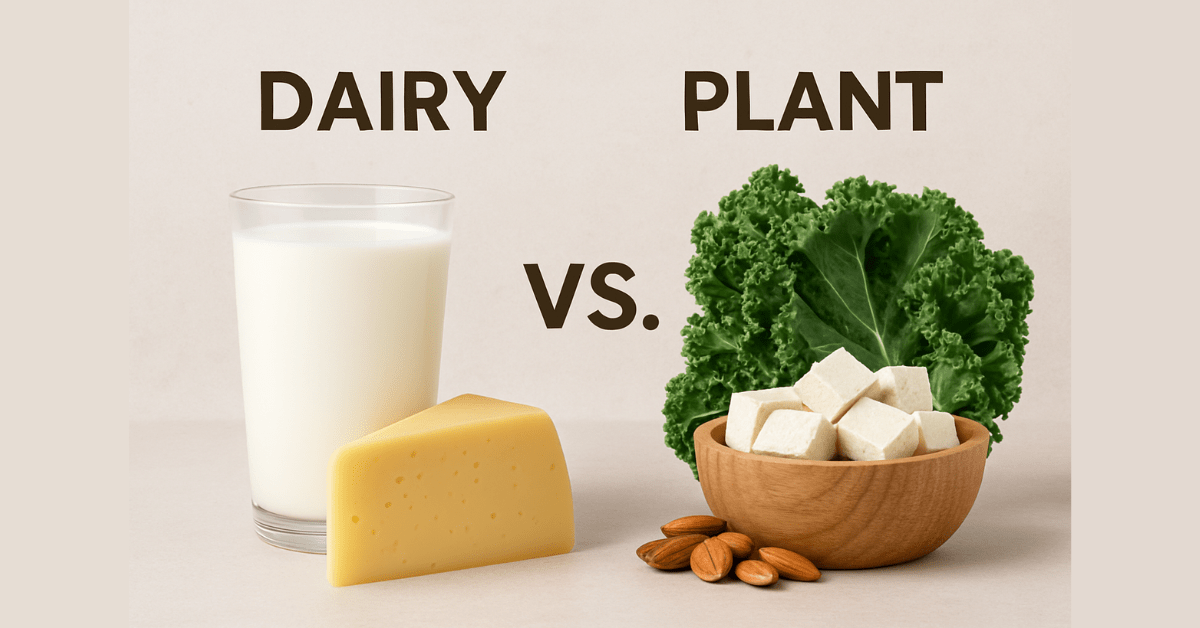
The Truth About Plant-Based Sources
When most people think of calcium, they think of milk, cheese, and yogurt. We’ve all heard the message: “Drink your milk for strong bones.”
But here’s the truth: dairy isn’t the only—or even the best—source of calcium. Many plant foods are rich in calcium, and they come with extra nutrients like fiber, antioxidants, and minerals (without the hormones, antibiotics, and mucus‑forming properties often linked to dairy).
Strong bones don’t just come from drinking milk. They come from whole-body nutrition: calcium, vitamin D, magnesium, vitamin K, protein, and exercise. Plant foods can give you plenty of what you need.
The Calcium Myth: Dairy vs. Plants
Dairy has long been promoted as the gold standard for calcium. Yes, an 8‑oz glass of milk contains about 300 mg of calcium. But here’s the myth-buster: many plant foods actually match or exceed this—without the digestive upset or inflammation dairy can cause in many women.
Top 10 Calcium-Rich Plant Foods (with mg per serving)
- Collard Greens (cooked, 1 cup) – 268 mg
- Turnip Greens (cooked, 1 cup) – 197 mg
- Bok Choy (cooked, 1 cup) – 160 mg
- Kale (cooked, 1 cup) – 177 mg
- Mustard Greens (cooked, 1 cup) – 165 mg
- Broccoli Rabe (cooked, 1 cup) – 100 mg
- Chia Seeds (2 Tbsp) – 177 mg
- Sesame Seeds/Tahini (2 Tbsp) – 130 mg
- Almonds (1 oz / ~23 nuts) – 75 mg
- White Beans (1 cup cooked) – 161 mg
Bonus powerhouse: Fortified plant milks (almond, oat, soy) can have 300–450 mg per cup depending on the brand—sometimes even higher than dairy milk. However, be sure to use seed oil free versions.
Calcium in Common Dairy Foods
- Milk (8 oz) – ~300 mg
- Yogurt (6 oz) – ~250–300 mg
- Cheddar Cheese (1 oz) – ~200 mg
- Cottage Cheese (1 cup) – ~138 mg
Notice something? Several plant foods (especially greens and seeds) rival or exceed dairy in calcium per serving—without the drawbacks.
Why Plants May Be Better for Your Bones
- Bioavailability matters – Many greens (like kale and bok choy) are highly absorbable calcium sources, while spinach (although high in calcium) contains oxalates that block absorption.
- Bone health is about balance – Magnesium, potassium, and vitamin K are just as critical as calcium, and plants provide them in abundance.
- Dairy isn’t the magic solution – Countries with the highest dairy intake actually have some of the highest osteoporosis rates. Strong bones come from diet diversity, not just dairy.
Bottom Line
You don’t need dairy to meet your calcium needs. With leafy greens, beans, nuts, seeds, and fortified plant milks, you can easily hit your daily goal (1,000–1,200 mg for most adults) while supporting digestion, hormones, and overall health.
So next time someone tells you that you have to drink milk for strong bones, you can smile and say, “Actually, my collards and chia seeds have me covered.”
Call to Action (CTA):
If you’re navigating energy crashes, hormone shifts, or gut issues and want to learn how food can help restore balance, let’s connect. Book a free Energy Reset Session and start nourishing your body naturally.